

Offshore support vessels are well-known for the assistance they provide to offshore oil and gas platforms, drilling rigs, and pipe layers. These vessels help with logistics and other tasks related to oil and gas exploration. Different types of offshore operations require different types of offshore support boats. Transport, standby capability, anchor management, and platform support are just some of the services offered by offshore support vessels. They also make it simpler for crew members to go to offshore locations. Several regional and international institutions have implemented substantial measures to promote the spread of low-carbon power generation technology. Some governments have set lofty targets for renewable energy infrastructure in an effort to cut carbon emissions. As an example, in August of 2021, the UK government announced that it would provide Siemens Gamesa with roughly USD 205.39 million as part of its "Offshore Wind Manufacturing Investment Support" initiative. Siemens Gamesa claims that the new funds will help keep the economy in the Yorkshire and Humber area growing. The demand for offshore supply vessels is expected to increase as a result of this.
Thermal power, nuclear power, oil and gas, and renewable energy are all needed to meet the world's expanding energy demands. The United Nations projects that by 2050 the global population will have risen to nearly 9.8 billion, from 7.6 billion in 2017. The discovery of many resources with potential for well drilling and production has increased demand for offshore supply vessels. The International Energy Agency (IEA) predicts that by 2050, the world will be able to become carbon neutral as a result of the addition of 350 GW of wind energy to the energy mix annually. By the same time, offshore capacity is predicted to reach 70 G.W. The offshore supply boats market is broken down into several submarkets based on function, including seismic, standby & rescue, multipurpose support, anchor handling tug supply, and platform supply. The anchor-handling tug supply vessel is expected to have the largest share of the market in terms of income from offshore supply vessels. Large oil and gas facilities may be easily moved from the shore to the desired area using AHTS units because to their robust design and other features. The major companies in the market invest heavily in research and development to increase their product offerings, which boosts the need for offshore supply vessels. New product launches, contractual agreements, mergers and acquisitions, increased investments, and collaboration with other organisations are just a few examples of the many strategic activities industry participants are pursuing to increase their global presence alongside significant market shifts. The offshore supply boats industry is becoming increasingly competitive, thus businesses in this field who want to grow and thrive must provide customers with affordable options.
Human population expansion has a major impact on the world's energy requirements. With a projected global population of 8.5 billion in 2030, different energy sources like oil & gas, renewables, thermal, and nuclear power would be essential. The BP Statistical Review of 2019 estimates that there are 1,729.7 billion barrels of undiscovered oil reserves, which increases the need for exploration and production. As a result, the market for offshore support vessels continues to expand. The percentage of primary energy that comes from renewable sources is expected to rise from roughly 10% in 2019 to between 35% and 65% by 2050, as reported by the BP Outlook 2023. The primary goal is to cut carbon emissions by 36% from 2017 levels by the year 2040. Between 2022 and 2027, the IEA projects a 75% increase, or 2,400 GW, in worldwide renewable energy capacity. Bulgaria plans to build the largest offshore wind farm in the world, a 1,400 MW facility, in the shallow middle section of the North Sea known as Dogger Bank. The use of offshore wind farms is crucial to the expansion of renewable energy. The OSV market will benefit from the increasing investments in offshore wind farms.
A supply-demand imbalance has developed as a result of the increase in the number of offshore support vessels on the market. More OSVs exist than are needed by consumers. This has resulted in increased rivalry among OSV providers, price competitiveness, and lower profits for many market participants. The oil and gas industry sees huge swings in demand and supply, which has had a huge impact on the OSV market. New construction increased as the market responded to the increased demand for OSVs brought on by high oil prices. However, as oil prices plummeted in 2014, so did the demand for OSVs, leaving many businesses with surplus resources. As a result of the oversupply, competition among OSV providers is fierce, with many businesses offering lower prices in order to win contracts. Because of this, costs have gone up, threatening the industry's capacity to turn a profit and maintain its financial footing. Some OSV operators have reduced their fleet sizes by destroying or selling boats, or by postponing the delivery of newbuilds, in order to deal with the overcapacity issue. In 2020, companies like Tidewater and Hermitage Offshore Services, BOURBON and Seacor Marine, and POSH Terasea sold off OSVs totaling about USD 180 million. As a result of these several causes, the offshore support vessel market is now saturated.
Report Coverage
Global Offshore Support Vessel research report categorizes the market for global based on various segments and regions, forecasts revenue growth, and analyzes trends in each submarket. Global Offshore Support Vessel report analyses the key growth drivers, opportunities, and challenges influencing the global market. Recent market developments and Offshore Support Vessel competitive strategies such as expansion, product launch and development, partnership, merger, and acquisition have been included to draw the competitive landscape in the market. The report strategically identifies and profiles the key Offshore Support Vessel market players and analyses their core competencies in each global market sub-segments.
| REPORT ATTRIBUTES | DETAILS |
|---|---|
| Study Period | 2017-2030 |
| Base Year | 2022 |
| Forecast Period | 2022-2030 |
| Historical Period | 2017-2021 |
| Unit | Value (USD Billion) |
| Key Companies Profiled | Vroon B.V. (Netherlands), Tidewater (U.S.), Maersk (Denmark), and Bourbon Offshore (France) |
| Segments Covered | • By Product |
| Customization Scope | Free report customization (equivalent to up to 3 analyst working days) with purchase. Addition or alteration to country, regional & segment scope |
Key Points Covered in the Report
- Market Revenue of Offshore Support Vessel Market from 2021 to 2030.
- Market Forecast for Offshore Support Vessel Market from 2021 to 2030.
- Regional Market Share and Revenue from 2021 to 2030.
- Country Market share within region from 2021 to 2030.
- Key Type and Application Revenue and forecast.
- Company Market Share Analysis, Offshore Support Vessel competitive scenario, ranking, and detailed company
profiles. - Market driver, restraints, and detailed COVID-19 impact on Offshore Support Vessel
Market
Competitive Environment:
The research provides an accurate study of the major organisations and companies operating in the global Offshore Support Vessel market, along with a comparative evaluation based on their product portfolios, corporate summaries, geographic reach, business plans, Offshore Support Vessel market shares in specific segments, and SWOT analyses. A detailed analysis of the firms' recent news and developments, such as product development, inventions, joint ventures, partnerships, mergers and acquisitions, strategic alliances, and other activities, is also included in the study. This makes it possible to assess the level of market competition as a whole.
List of Major Market Participants
Vroon B.V. (Netherlands), Tidewater (U.S.), Maersk (Denmark), and Bourbon Offshore (France)
Primary Target Market
- Market Players of Offshore Support Vessel
- Investors
- End-users
- Government Authorities
- Consulting And Research Firm
- Venture capitalists
- Third-party knowledge providers
- Value-Added Resellers (VARs)
Market Segment:
This study forecasts global, regional, and country revenue from 2019 to 2030. INFINITIVE DATA EXPERT has segmented the global Offshore Support Vessel market based on the below-mentioned segments:
Global Offshore Support Vessel Market, By Type
Anchor Handling Tug Supply
Platform Supply
Multipurpose Support
Standby & Rescue
Seismic
Global Offshore Support Vessel market, By Application
Shallow Water
Deepwater
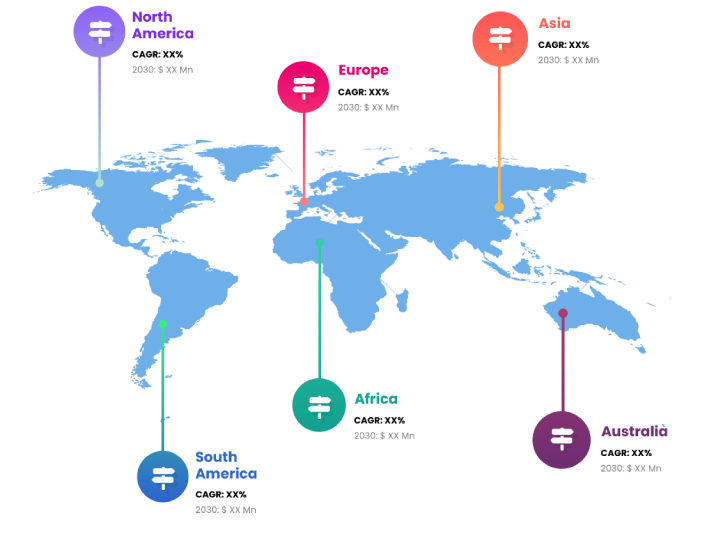
Global Offshore Support Vessel market, Regional Analysis
- Europe: Germany, Uk, France, Italy, Spain, Russia, Rest of Europe
- The Asia Pacific: China,Japan,India,South Korea,Australia,Rest of Asia Pacific
- South America: Brazil, Argentina, Rest of South America
- Middle East & Africa: UAE, Saudi Arabia, Qatar, South Africa, Rest of Middle East & Africa
You will get in-depth and extensive offshore support vessel market market research and competitor analysis for your business to help you develop more profound insights into the offshore support vessel market Market.
Through INFINITIVE Data Expert is a professional Market Research services, I will identify the offshore support vessel market market size, demand & opportunities, growth rate, and target audience with a comprehensive analysis of your competitors.